Urban Summer Lab: urban camp in the heart of the city
Most teenagers associate camps with leaving the city, carrying heavy backpacks, and sleeping in basic conditions. But it doesn’t always have to be that way.
What if we could bring all the benefits of an educational camp directly into our city?
This was the challenge we took on this summer through organising the Urban Summer Lab – an innovative urban camp that offered adolescents the opportunity to explore key concepts about adult life, financial management, and interpersonal relationships, while also developing independent life skills.
Redefining the concept of a camp
We kept the intensity and energy of a camp, but removed the logistical challenges and high costs. The day is filled with activities and challenges, while in the evening everyone returns to the comfort of their own home. In this way, non-formal education became accessible to more young people and showed that you don’t have to leave the city to have a meaningful experience.
At Urban Summer Lab, there are no teachers and students, but facilitators and participants who learn from one another. There are no graded lessons. Instead of “right” and “wrong” answers, different perspectives emerge and are explored together. Learning happens through dialogue, questions, and shared solutions.
It is precisely through this collaboration that adolescents develop perhaps the most important skill of all: the ability to work with different people, to listen, and to build together.


How did we get here?
It all started in June, at Swimathon, where three teams of swimmers and one individual swimmer entered the pool to support our cause.
Alongside them were also “virtual swimmers” – people who, although not physically present, chose to donate and become part of our story. Together, we managed to raise the funds needed to organise Urban Summer Lab.
When the time came to run the camp, over the course of six weeks, more than one hundred adolescents crossed the threshold of Youth Hub to discover, in a relaxed and friendly environment, how to prepare for adult life.
Each day included self-reflection exercises, honest conversations about relationships and conflict, budgeting activities, and team challenges that brought out the creativity and energy of the young people.
The programme was structured around several key areas
Introspection & interpersonal relationships
Career preparation
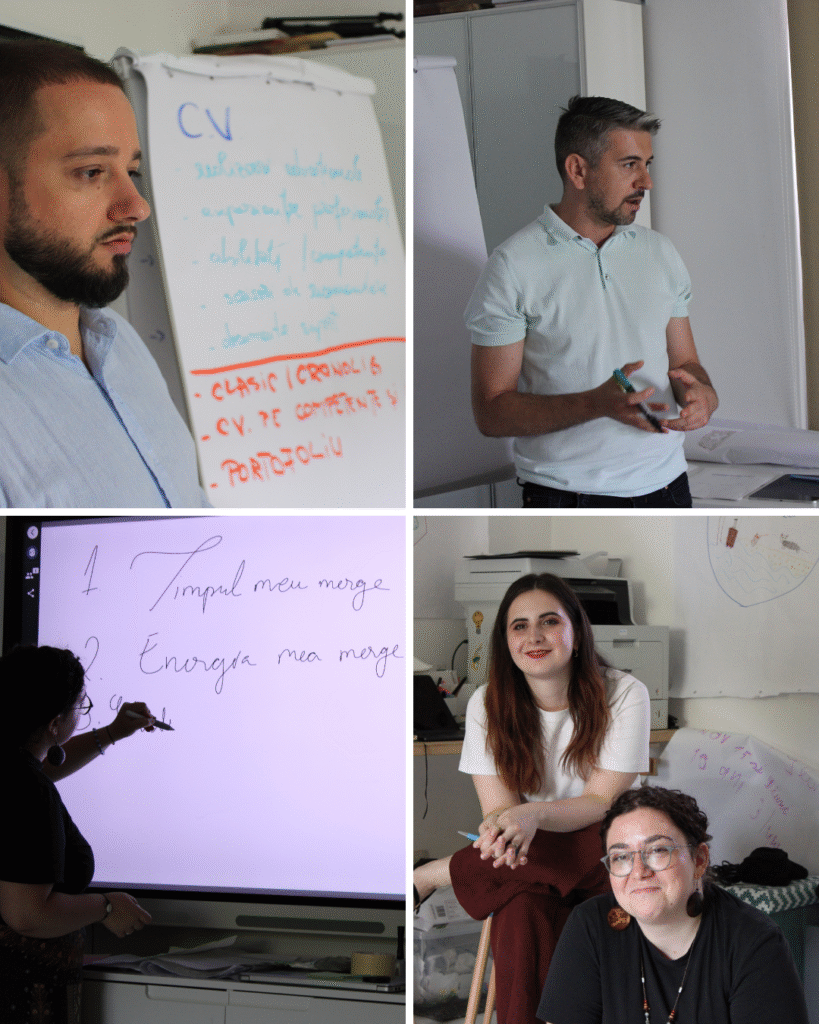
Each adolescent created a roadmap of the most important moments in their life, which they then presented to the group. Sharing their life story in detail gave them a clearer picture of their skills and passions. Using this roadmap, the young people built their own CVs and recommendation letters, and gained insights into how both the recruitment process and university admissions work, as well as what to highlight during these processes.
Self-management and teamwork

Article written by a young volunteer of the Romanian Angel Appeal Foundation, co-edited by the RAA team.